Maximizing Fundraising Revenue with Predictive Analytics
Problem and Context
Nonprofits frequently face fundraising challenges consisting of limited
visibility into donor behavior, reliance on fragmented data from multiple
campaigns, and difficulty predicting donation amounts. These challenges make
it difficult to allocate fundraising resources effectively or determing how to prioritize outreach.
By providing nonprofit fundraising teams with tools to predict donor behavior, we help organizations
unlock higher probability fundraising opportunities from the data they already have.
Fundraising teams equipped with predictive models are better positioned to
achieve annual fundraising goals, identify new revenue streams, reduce donor fatigue, and build stronger
donor relationships.
Proposed Solution
The goal of this implementation is to demonstrate an internal tool that a fundraising team might use to predict
the size of a potential donation from a user generated donor profile. When a profile is identified as a
potential high-value donor through this tool, fundraising teams are equipped with recommended ask amounts.
We propose developing a machine learning workflow to predict donation size using the following historical data:
- The date of previous donations
- Payment method
- What city the donation came from
- The size of previous donations
- Whether the donation occurred during a fundraising campaign
- Lifetime donation count
- Number of donations in a given year
Implementation
Accessing the packaged model is easiest when embedded within an intranet website, however we can also integrate this service
into Google Sheets, Power BI, or another internal landing space by request. Below is an interactive demonstration of a hypothetical predictive
model integrated within an intranet website for your organization.
This model takes in a user-generated donor profile and returns a prediction for their next contribution with
reasonable upper and lower bounds.
Predicted Contribution
Disclaimer: This demonstration uses simulated data generated solely for illustrative purposes. The predictions shown are not based on real donor information and should not be used for decision-making within an active organization. This tool is intended only to demonstrate modeling capabilities and system integration.
Visualizations
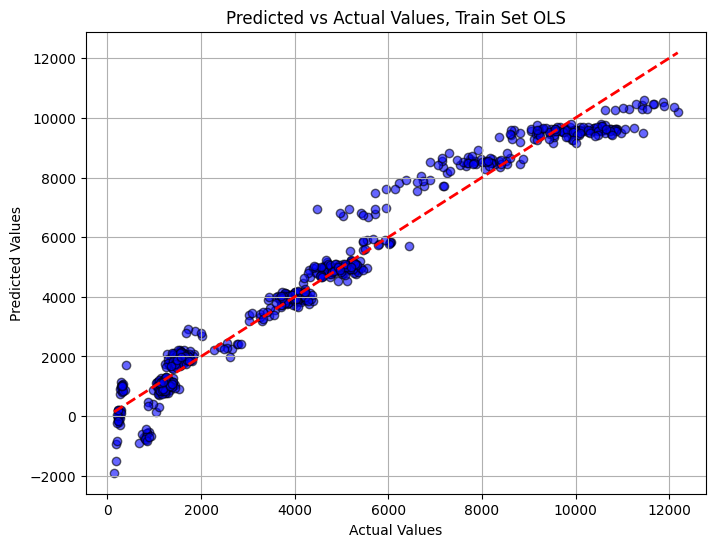
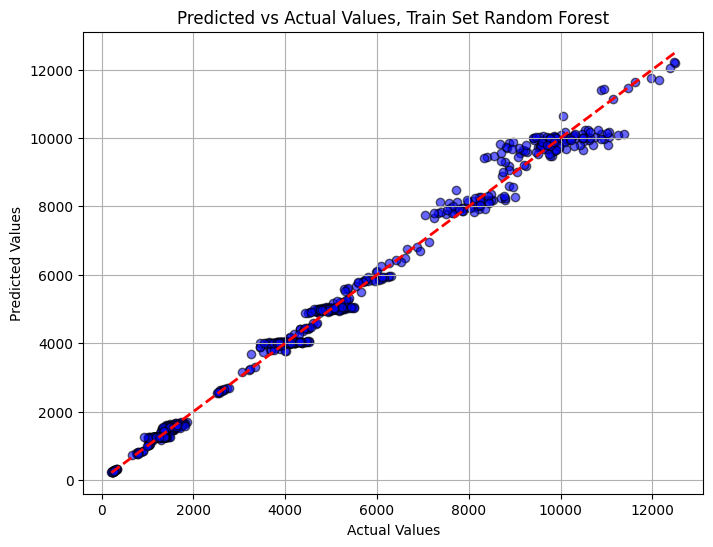
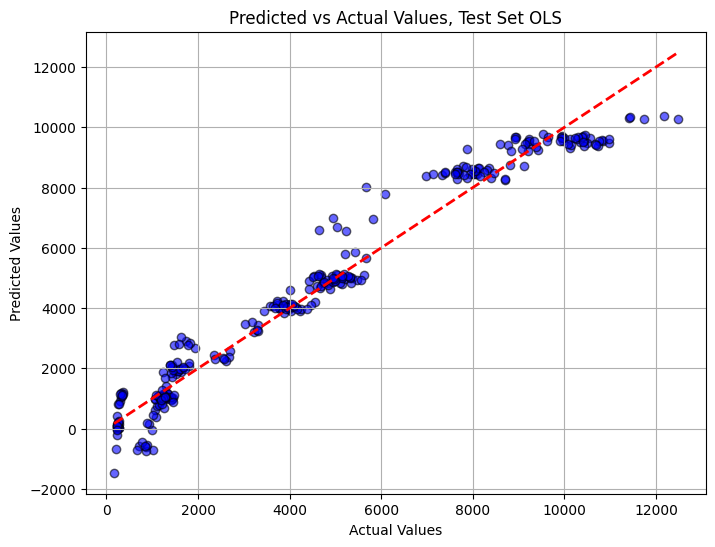
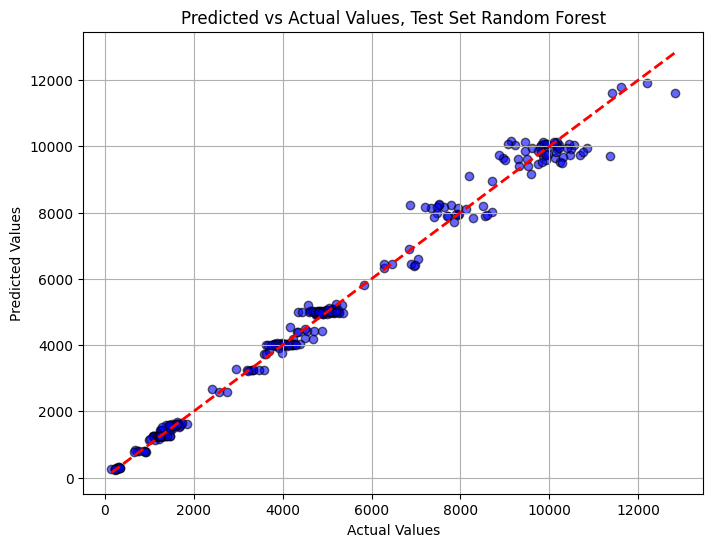
The following visualizations demonstrate the differences in prediction values for a baseline
model (OLS) and a Random Forest. Models that predict values closer to the dotted red line
indicate better quality predictions.
Outcome and Benefits
By implementing a predictive donation model, organizations gain measurable improvements
in fundraising efficiency, donor targeting, and revenue optimization. Rather than relying
solely on intuition or broad segmentation strategies, nonprofits can use data-driven
predictions to prioritize outreach toward donors with the highest expected contribution value.
Improved Resource Allocation: Fundraising teams can focus time, marketing spend,
and personalized outreach efforts on high-value prospects, reducing wasted effort on
low-probability opportunities.
Increased Revenue Predictability: Forecasting expected donation sizes enables
more accurate budgeting, campaign planning, and cash flow management.
Higher Return on Fundraising Campaigns: By identifying which donors are most
responsive during campaign periods, organizations can optimize messaging and timing to
maximize contribution impact.
Reduced Risk Through Confidence Intervals: Providing upper and lower bounds
around each prediction allows leadership to assess uncertainty and make informed
strategic decisions.
Scalable, Repeatable Insights: Once deployed, the model can be configured to
continuously update predictions as new donor data is collected, ensuring that fundraising strategy evolves
alongside donor behavior.
Ultimately, this solution transforms historical donation data into actionable intelligence,
empowering nonprofits to raise more funds with greater precision, transparency, and
operational efficiency.
Reference Code
The full implementation, including visualization code, training models, evaluation models, and documentation, is available on GitHub.